
Posted by James Peters on Nov 16, 2026, 6:00:02 AM
Put a roomful of higher education AV and IT professionals together and you learn something fast — whether you’re managing a few classrooms or an entire campus, many of the challenges are surprisingly similar.
I recently attended and presented at the Educational Technology Collaborative (ETC) annual conference at Penn State. It was my first ETC, and I had an amazing time. The sessions were insightful, the conversations were refreshingly candid and I came away with plenty of new ideas. I also enjoyed hearing directly from the people who build and support the spaces students and instructors use every day.
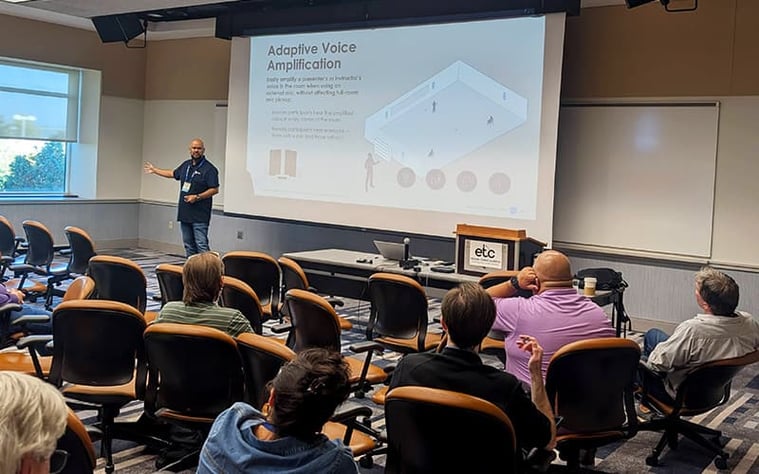
I presented a session titled From Lecture Halls to Active Learning Spaces: Rethinking Audio for Modern Higher Education. Between that experience and the sessions I attended, four themes stood out.
1. Simplicity matters more than any other feature
One message I heard in different forms was that impressive technology is not always practical technology. It’s the AV and IT teams who get the call when something fails, and a system that requires constant configuration or troubleshooting can quickly become a burden.
An excellent example of simplicity came from the equipment used during the conference itself. Q&A sessions were handled with a foam cube microphone — the type that audience members pass to someone, let them speak and move on. It was intuitive, and the positive reactions I heard reminded me that a good user experience does not need much explanation.
In another session, a university AV team described choosing not to enable a smartphone-based audience microphone feature because of the training and complexity it would add. Even a feature that could be highly beneficial may not suit a classroom if students or instructors need to take too many steps to use it.
For learning spaces, simplicity shouldn’t mean fewer possibilities. It should mean instructors can focus on teaching and students can participate without having to think about the technology. This is the same principle behind how our own systems are designed: We include full-room microphone pickup and continuous autocalibration so the audio works without complex programming.
2. Higher ed is being asked to do more with less
Budget constraints came up repeatedly in sessions and hallway conversations. Expectations for flexible and hybrid-capable spaces have grown, but the resources to deliver and maintain them have not necessarily kept pace.
The team from Truman State University showed what this looks like in practice. They described how they transformed a lightly used former language lab into a collaborative classroom by starting with what they already owned: displays, furniture and basic infrastructure. Instead of trying to build the ideal room on day one, they tested concepts, involved faculty and made improvements based on how the space was actually being used.
Soon, the team noticed instructors kept moving between different activity areas. So, they adapted the design to include a mobile podium. The lesson was to not default to buying more equipment until you understand what would make the room work better.
That approach — reusing what you can, prototyping before committing and building flexibility — feels increasingly relevant. What matters isn’t how much equipment goes into the room, but what people can do with it.
3. Accessibility is starting new conversations about classroom audio
Accessibility was one of the liveliest discussion topics following my own ETC presentation. Several attendees asked about Auracast™ broadcast audio, which we’ve built into the Nureva® HDX series. They wanted to know how it could help make classrooms more accessible to students who use personal listening devices.
The questions were practical: how students would connect, what equipment would be needed, how it compares with existing assistive listening approaches and how institutions could plan for it.
Auracast broadcast audio is promising, but its deployment still depends on compatible receiving devices, room design and practical implementation decisions. Education in general about this technology is needed. There’s an opportunity for manufacturers and industry groups to help institutions make informed decisions, rather than simply adding another product to the checklist.
4. Good AV planning begins long before installation
A perfect real-life example came from Iowa State University, which compared two building projects and the very different roles AV planning played in each.
In one project, AV expertise and end-user input came too late. Requirements were unclear, infrastructure had not been planned around the actual audiovisual needs and substantial rework was required to make corrections. The presenter estimated it cost more than $200,000 in AV-related infrastructure change orders.
For a second project, the team took a different approach. AV specialists were involved early, functional needs were documented room by room and the team worked with facilities and construction consultants throughout design and delivery.
The takeaway was straightforward: AV should be part of the conversation while a space is being planned, not brought in once walls, pathways and room layouts are already decided. Early involvement helps protect budgets, reduces surprises and, most importantly, keeps the focus on the experience the room is meant to support.
What I’m taking home from ETC
Looking back, the common thread through all four lessons is a focus on people. Simpler systems help instructors teach confidently. Cost-conscious decisions help campuses serve more spaces. Accessible audio opens up participation. Early planning brings the right voices into the design process.
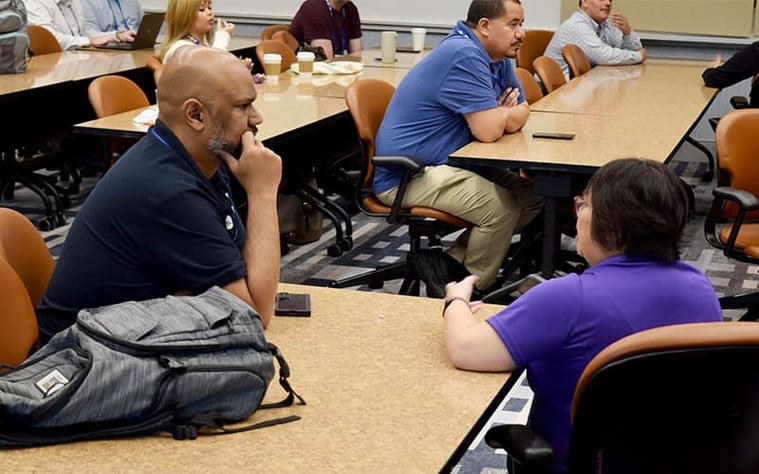
I was grateful to share Nureva’s perspective and what we’ve learned from designing adaptable, intuitive audio systems. But I learned just as much from the questions, hallway conversations and stories others shared with me. I left Penn State with new ideas, new friends and a stronger appreciation for the higher ed AV community.
Thanks to everyone who made the week so welcoming. I’m looking forward to continuing those conversations.


